
Drew Barrymore: A Deep Dive
A look into the lift of Drew Barrymore, who worked with Steven Spielberg at a young age.

Drew Barrymore
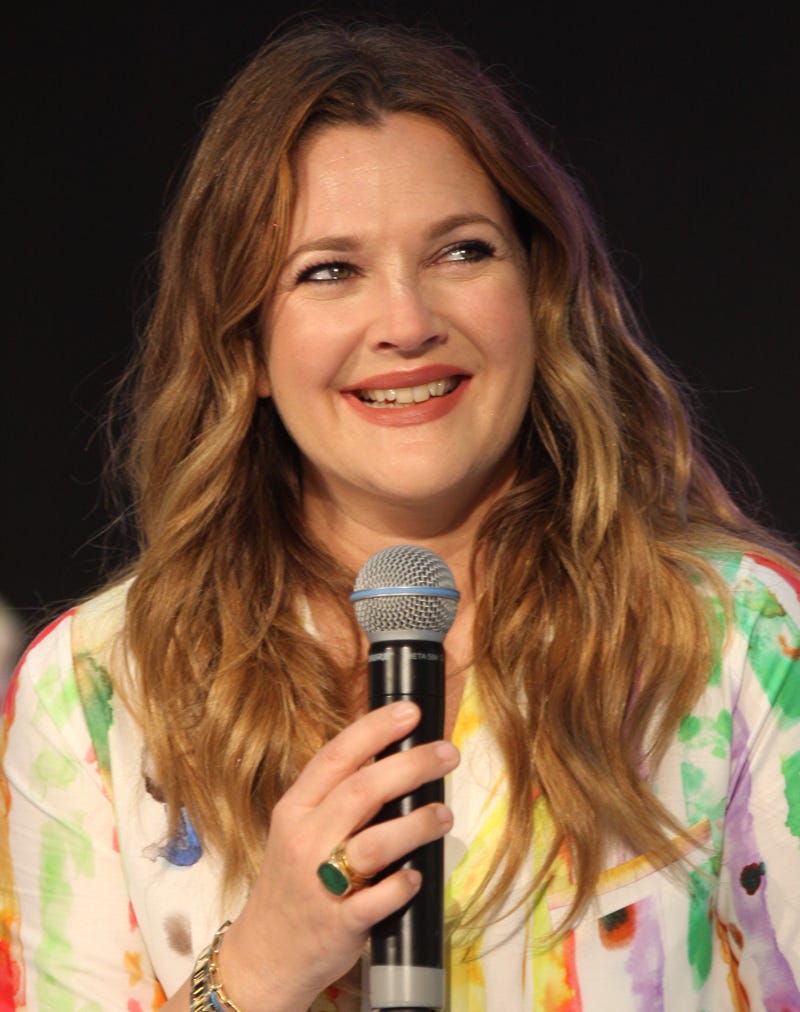
Born: Drew Blythe Barrymore February 22, 1975 — Culver City, California, U.S.
Spouses:
Jeremy Thomas (m. 1994; div. 1995)
Tom Green (m. 2001; div. 2002)
Will Kopelman (m. 2012; div. 2016)
Partner: Fabrizio Moretti (2002–2007)
Parents: Jaid Barrymore and John Drew Barrymore
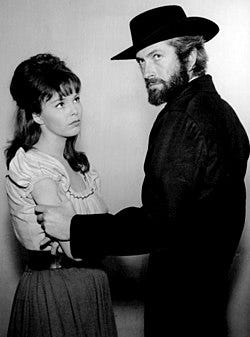
Barrymore was born on February 22, 1975, in Culver City, California, a suburb of Los Angeles. Both of her parents were also actors.
Her mother was born in a displaced persons camp in Brannenburg, West Germany, to Hungarian World War II refugees.
Fim History:
Extra-Terrestrial (1982),
established herself as a Hollywood leading actress with
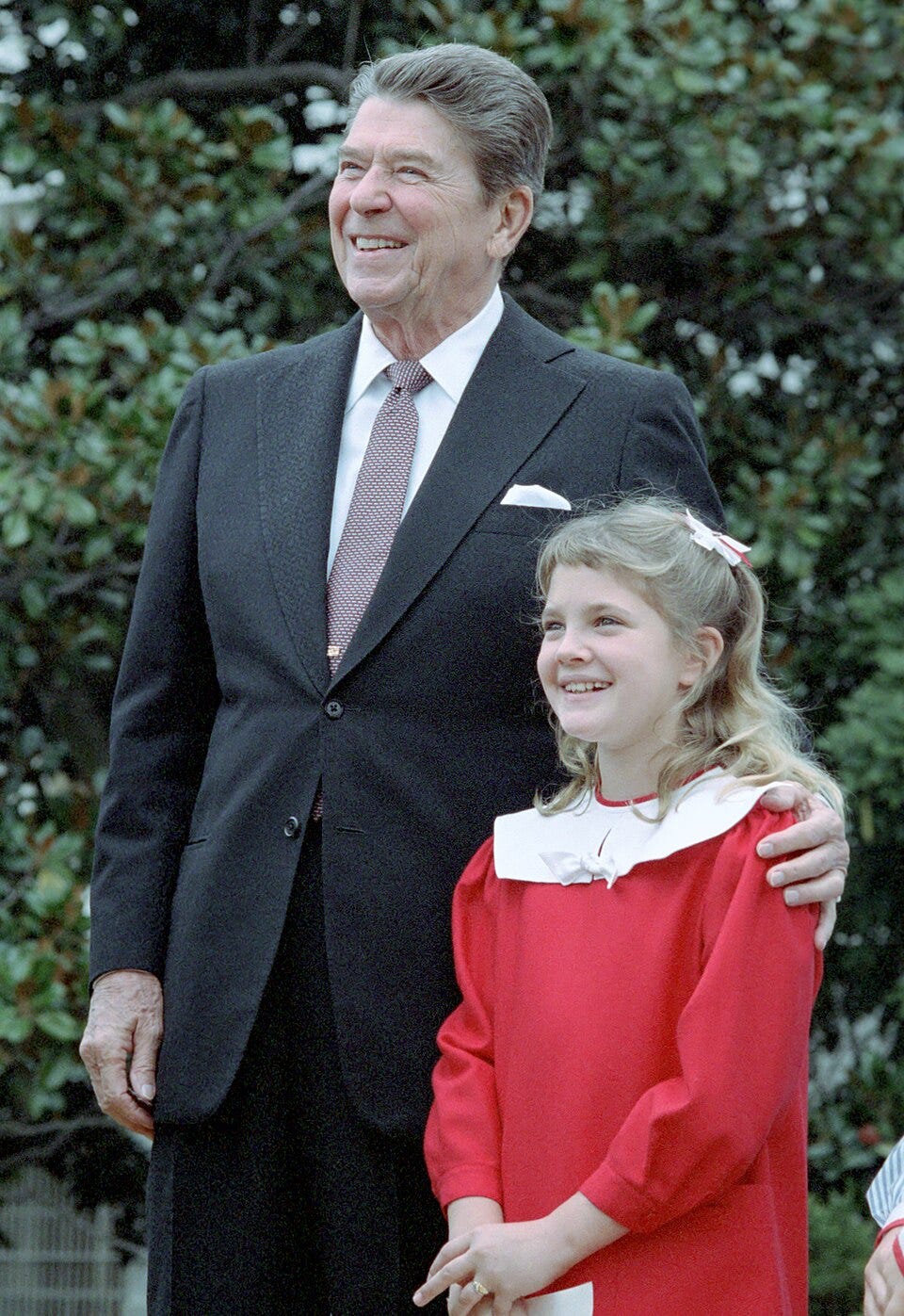
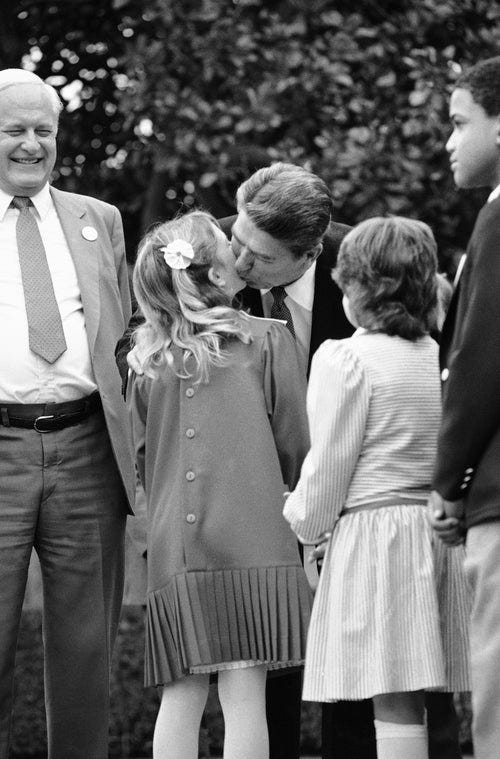

Firestarter (1984)
See You in the Morning (1989)
Poison Ivy (1992)
Boys on the Side (1995),
Batman Forever (1995)
Scream (1996),
Ever After (1998),
Never Been Kissed (1999),
Charlie’s Angels (2000)
and Charlie’s Angels: Full Throttle (2003)
With Adam Sandler: The Wedding Singer (1998), 50 First Dates (2004), and Blended (2014).
Donnie Darko (2001) (Jake Gyllenhaal
Confessions of a Dangerous Mind (2002)
Music and Lyrics (2007)
He’s Just Not That Into You (2009)
Going the Distance (2010)
Grey Gardens (2009)
Santa Clarita Diet (2017–2019),
Hosts the daytime talk show The Drew Barrymore Show (2020–present).
Barrymore is the founder of the production company Flower Films and has starred in several of its projects. She made her directorial debut with Whip It (2009). She launched a range of cosmetics under the Flower banner in 2013. Her other business ventures include a range of wines, homeware, and clothing. She has released four New York Times bestselling books, including the memoir Little Girl Lost (1990) and the photobook Find It in Everything (2014).
All of her paternal great-grandparents, Maurice and Georgie Drew Barrymore, Maurice and Mae Costello (née Altschuk), and her paternal grandparents, John Barrymore and Dolores Costello, were actors, with John being arguably the most acclaimed actor of his generation. Barrymore is a niece of Diana Barrymore, a grandniece of Lionel Barrymore, Ethel Barrymore and Helene Costello, and a great-great-granddaughter of Irish-born John and English-born Louisa Lane Drew, all of whom were also actors. She is a great-grandniece of Broadway idol John Drew Jr. and silent film actor, writer and director Sidney Drew.
Barrymore’s godmothers are actress Sophia Loren and Lee Strasberg’s widow, Anna Strasberg; Barrymore described her relationship with the latter as one that “would become so important to me as a kid because she was so kind and nurturing.” Her godfather is filmmaker Steven Spielberg.
In her 1991 autobiography Little Girl Lost, Barrymore recounted early memories of her abusive father, who left the family when she was six months old. She and her father never had a significant relationship and seldom spoke.
Barrymore grew up on Poinsettia Place in West Hollywood, until she moved to Sherman Oaks at the age of seven. In her 2015 memoir Wildflower, she says she spoke “like a valley girl” because she grew up in Sherman Oaks. She moved back to West Hollywood on becoming emancipated at age 14.
She attended elementary school at Fountain Day School in West Hollywood and Country School.
In the wake of her sudden stardom, Barrymore endured a notoriously troubled childhood. She was a regular at Studio 54 (Andy Warhol also spent a lot of time there) as a young girl, and her nightlife and constant partying became a popular subject with the media. She was placed in rehab at 13, and spent eighteen months at Van Nuys Behavioral Health Hospital, an institution for the mentally ill.
A suicide attempt at 14 put her back in rehab, followed by a three-month stay with singer David Crosby and his wife. The stay was precipitated, Crosby said, because she “needed to be around some people that were committed to sobriety.” Barrymore described this period of her life for Little Girl Lost. After a successful juvenile court petition for emancipation, she moved into her own apartment at the age of 15.
Barrymore experienced a troubled youth and acted only intermittently throughout the late 1980s. She next starred in the 1989 romance film See You in the Morning. Vincent Canby of The New York Times criticized the “fashionable phoniness” of the film, but positively singled out Barrymore.
In Far from Home, she played a teenager who gets stranded with her father in a small, remote desert town. The film went largely unnoticed by audiences and received negative reviews from critics, who dismissed the sexual portrayal of her role.
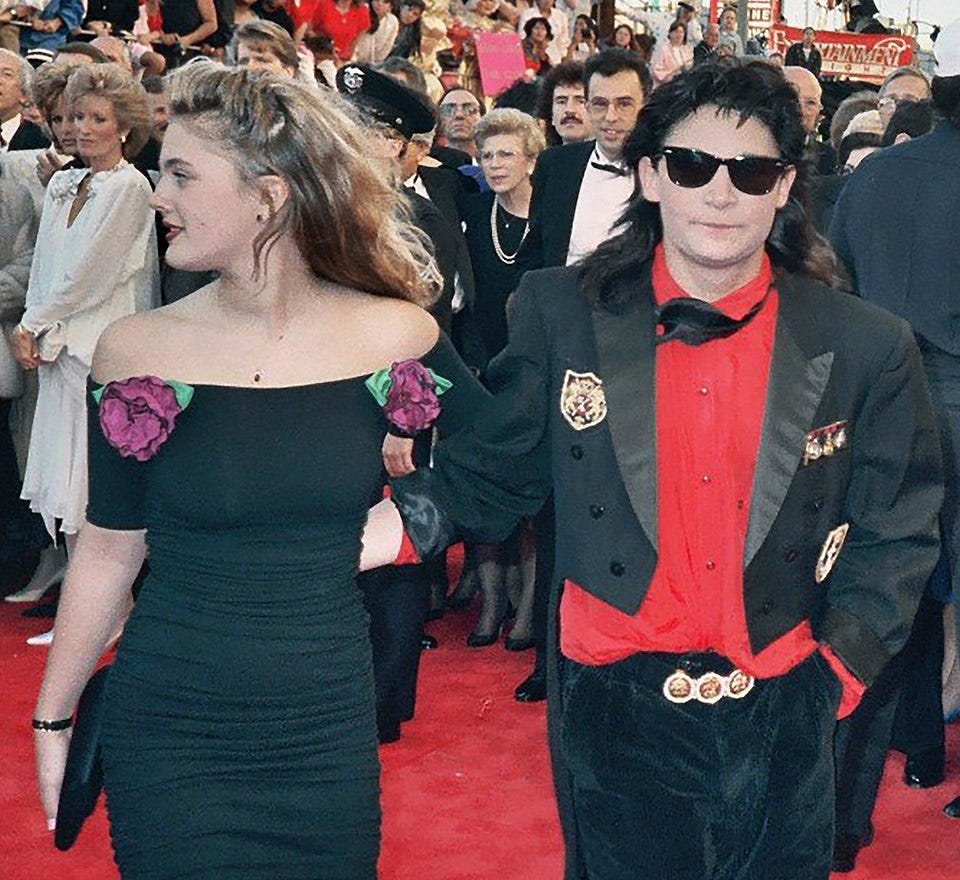
Barrymore’s rebelliousness played itself out on screen and in print. She played a poor teenage girl in Poison Ivy, which was a box-office bomb, but was popular on video and cable. Her character “Ivy” was ranked at #6 on the list of the top 26 “bad girls” of all time by Entertainment Weekly. Barrymore was 17 when she posed nude with her then-fiancé, actor Jamie Walters, for the cover of the July issue of Interview magazine; she also appeared nude in pictures inside the issue.
In Guncrazy, Barrymore played a teenager who kills her abusive stepfather. Variety remarked that she pulled her character impressively”, and Barrymore was nominated for the Golden Globe Award for Best Actress in a Miniseries or Television Film. She played the younger sister of a murdered ballerina in No Place to Hide and a writer followed by what is apparently her evil twin in Doppelganger.
Both films were panned by critics and failed to find an audience. She appeared in the western film Bad Girls, which follows four former prostitutes on the run following a justifiable homicide and prison escape. Roger Ebert, in his review for the film, wrote for Chicago Sun-Times: “What a good idea, to make a Western about four tough women. And what a sad movie.”
Barrymore posed nude for the January 1995 issue of Playboy. Soon after, her godfather Steven Spielberg gave her a quilt for her 20th birthday with a note that read, “Cover yourself up.” Enclosed in the quilt were copies of her Playboy pictures which had been altered by Spielberg’s art department so that she appeared fully clothed. Barrymore later said that she would not let her own child make the same choice she did.
While appearing on the Late Show with David Letterman, Barrymore climbed onto the desk, flashed her breasts to David Letterman and gave him a kiss on the cheek as a birthday gift. She modeled in a series of Guess? jeans ads during this time. In the late 1990s, Barrymore re-established her image and continued to be a highly bankable star.
In Boys on the Side, Barrymore played a pregnant girl attempting to escape from her abusive boyfriend. It was a box office success and was positively received by critics. In the superhero film Batman Forever, she played one of the two female assistants for Two-Face (Tommy Lee Jones). Jim Carrey appeared as the Riddler in that movie and Val Kilmer played batman. Debi Mazar played opposite to her as “Spice”, while drew played “Sugar”. The movie also featured Nicole Kidman as Batman’s love interest and Chris O’Donnell as Batman’s sidekick Robin.
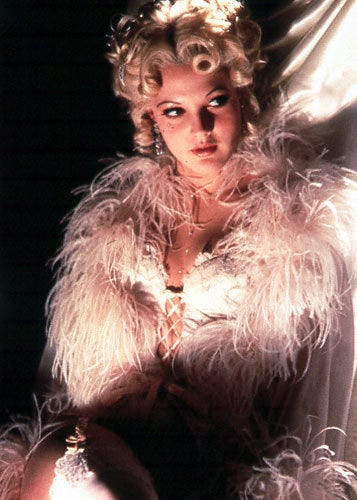
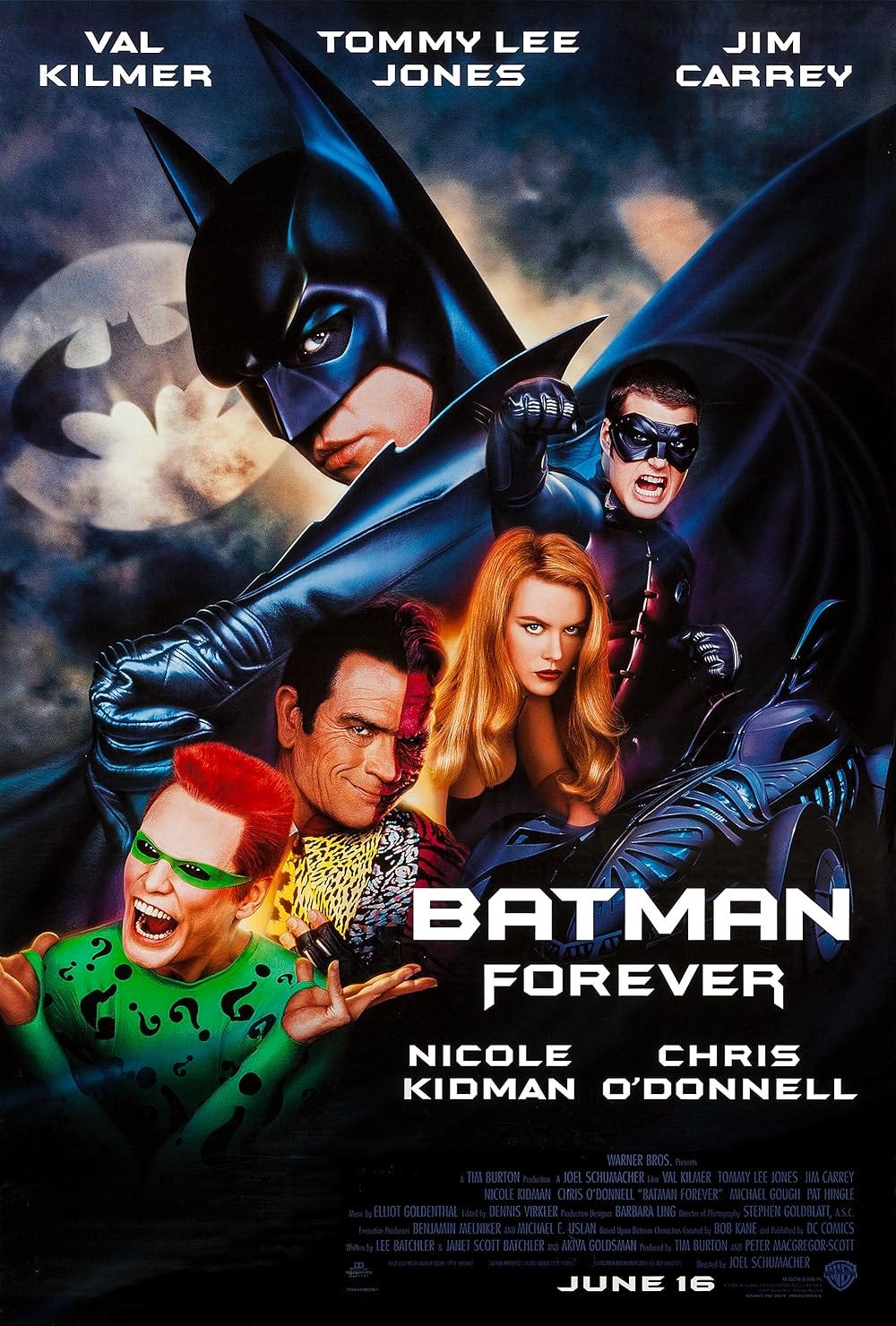
Batman Forever is a campy style of Batman, a cult classic and fun to go back to.
Barrymore had a small role in Wes Craven’s slasher film Scream (1996). She read the film’s script and was interested in being involved, approaching the production team herself to request a role. The producers were quick to take advantage of her unexpected interest and signed her to play the lead role of Sidney Prescott.
After unexpected commitments, Barrymore played Casey Becker in a minor role and Neve Campbell took the leading one. Scream was released to critical acclaim and made $173 million worldwide. She was nominated for the Saturn Award for Best Supporting Actress.
In The Wedding Singer (1998), Barrymore played a waitress in love with a character by Adam Sandler. Variety found the film to be a “spirited, funny and warm saga” that serves them up “in a new way that enhances their most winning qualities”.
Budgeted at $18 million, the film grossed $123.3 million internationally. In Home Fries (1998), Barrymore played a pregnant woman unknowingly falling for the stepson of the late father of her baby. She starred in the historical drama film Ever After (1998), which made $98 million and was inspired by the fairy tale Cinderella. Roger Ebert said about Barrymore and the film: “she can hold the screen and involve us in her characters”.
After establishing Flower Films, Barrymore and Nancy Juvonen produced the company’s first film, Never Been Kissed, in which Barrymore played an insecure copy editor for the Chicago Sun-Times and a high school student. While reviews from critics were mixed, CNN noted: “There are two words which describe why this film works: Drew Barrymore. Her comedic timing and willingness to go all out in her quest for a laugh combine to make Never Been Kissed a gratifying movie-going experience”. The film was a commercial success, grossing $84.5 million.
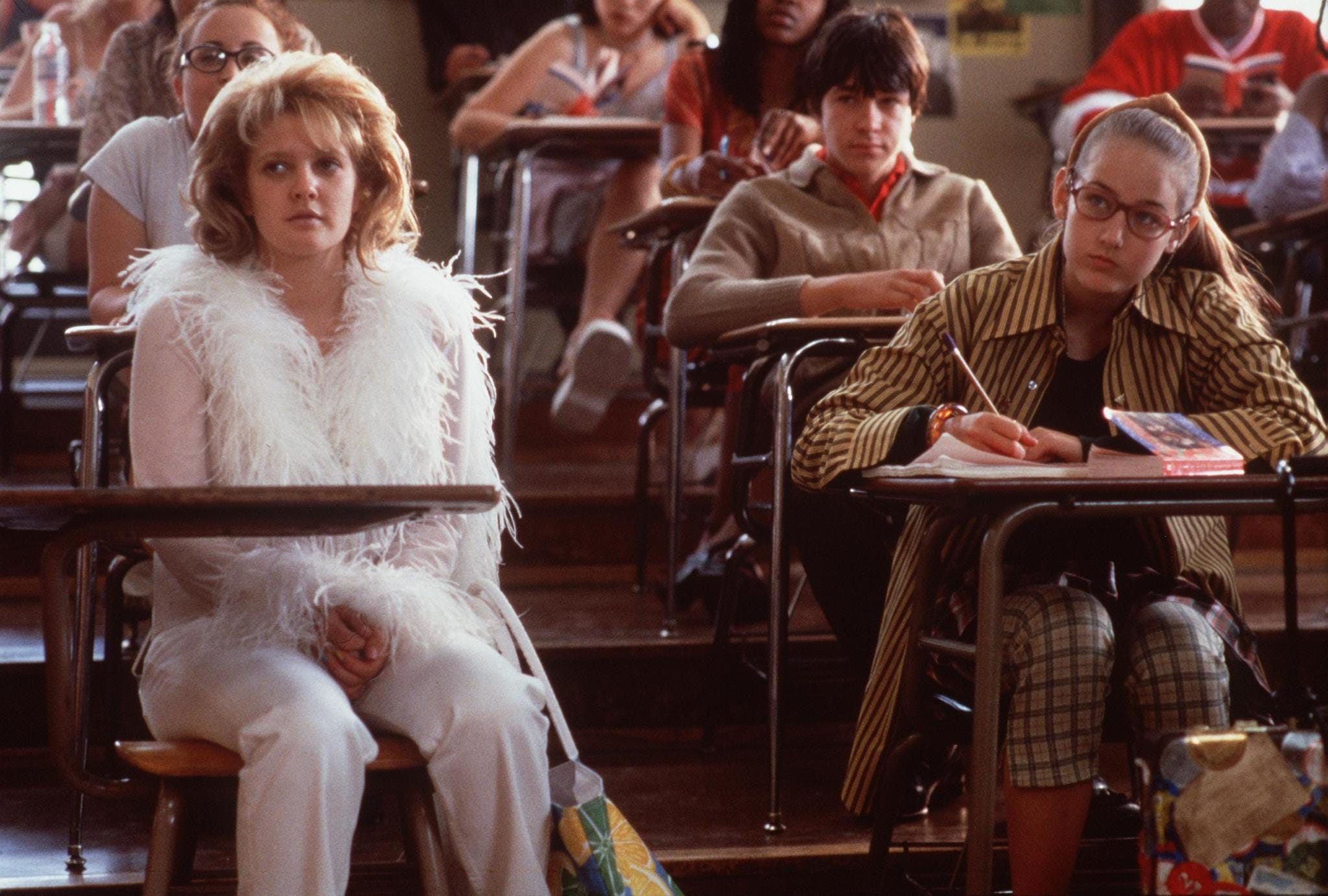
I actually enjoyed this movie growing, but looking back the concept is a bit creepy… the concept of the male romance role thinking she’s a teenager.
I’ll add more to this later.